Is it a real diamond?
Yes. Same crystal, same hardness, same optics.
The difference is where the carbon crystallised—an apparatus instead of the earth. That difference is real, disclosed and priced in.
← All answers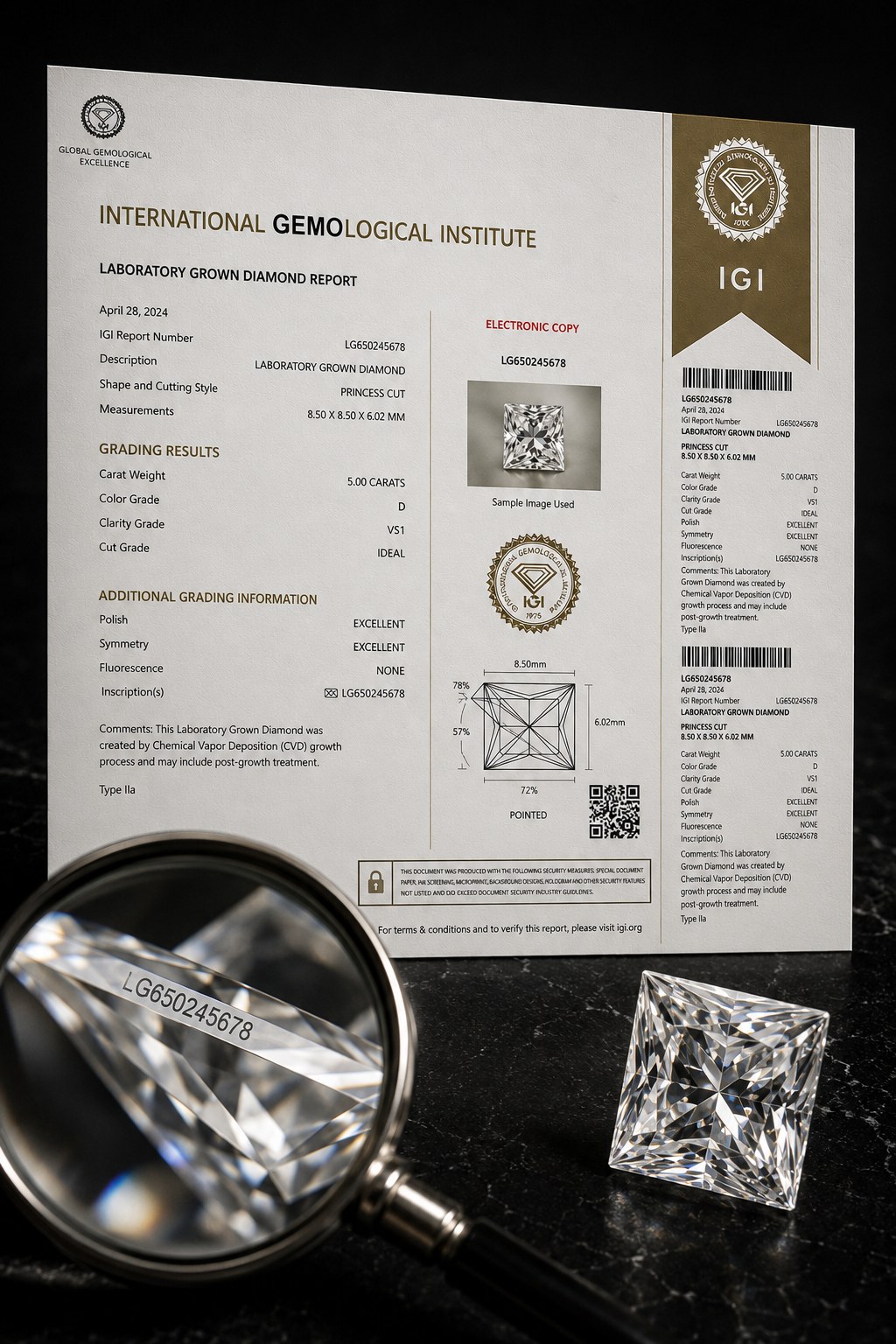
What it is
A laboratory-grown diamond is carbon crystallised in the same cubic structure as a mined diamond. Hardness, brilliance, fire and durability are the same because the material is the same.
Graders use the same 4Cs. An IGI report for a laboratory-grown stone reads like a report for a mined one, with the origin stated on the document.
What it is not
It is not rare. Production scales with technology, which is why the price is lower and may fall further. DD never sells scarcity, provenance or heirloom language with it.
It is not a fake, a simulant or “like a diamond”. Moissanite and cubic zirconia are different materials with different optics. This is diamond.
How origin is detected
Standard jeweller tools cannot separate the two—both pass a thermal diamond tester. Detection requires laboratory instruments that read growth patterns and trace fluorescence.
That is exactly why DD discloses origin everywhere: naming, certificate, invoice and service records. The honesty is structural, not decorative. All DD stones carry their IGI report number laser-inscribed on the girdle — microscopic, permanent, and matchable to the certificate in seconds.