How big will it actually look?
Carats are weight. Presence is surface.
Two stones of identical weight can look meaningfully different sizes. Buy the face-up outcome, not the number.
← All answers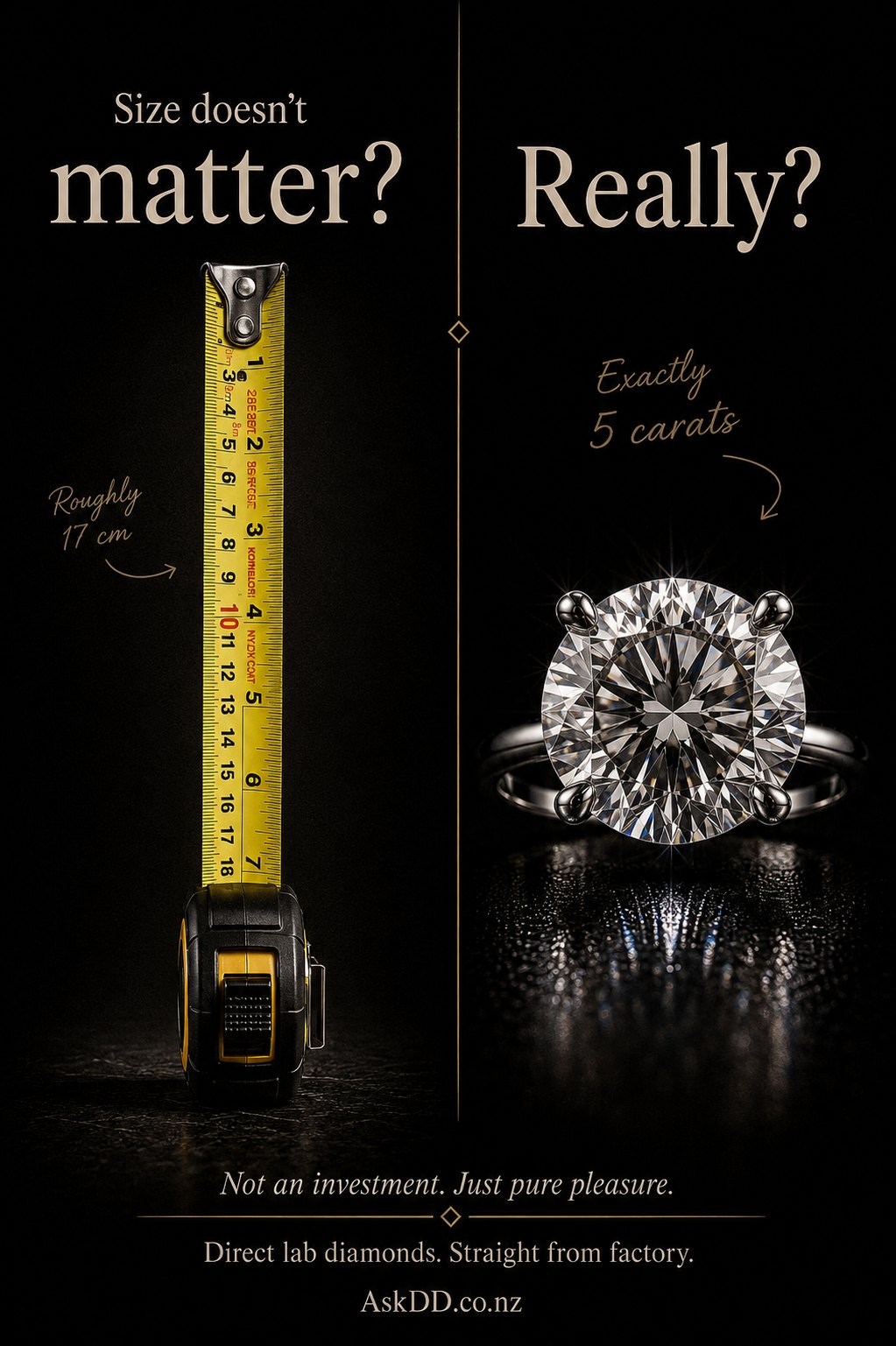
Carat weight versus face-up size
Carat measures mass. What the eye reads is spread—the area facing up. A deep-cut stone hides weight underneath where nobody sees it.
Elongated shapes such as pear, oval and emerald cuts carry more of their weight in visible surface, which is why they look larger per carat than rounds.
Proportion beats paper
A well-proportioned stone one grade “lower” on paper routinely out-performs a poorly cut stone with a prettier certificate line. Light behaviour is the product.
DD selects for spread, symmetry and life first, then confirms the grades support them. That order matters.
Scale on the body
The same stone reads differently on different hands, ears and necklines. Setting height, claw weight and band width all change the impression of size.
This is why the DD brief asks what the piece must do when worn—presence is a styling outcome, not a specification line.